

Generic shipping tools ask, “Where is it going?”
Meal prep delivery has to ask a harder question:
“What temperature is it at, how long has it been there, and when does that start to matter?”
That is the difference between ordinary ecommerce and cold-chain meal delivery. A customer waiting for a jacket can usually wait another day. A customer waiting for prepared meals needs to know whether the box is safe, whether dinner is still covered, whether the food should go into the fridge or freezer, and whether the subscription is reliable enough to trust next week.
Cold chain is not just a logistics term. For meal prep ecommerce, it is part of the product promise.
The website, checkout, customer account, courier integration, support workflow, and delivery policy all need to understand that prepared food is time-sensitive and temperature-sensitive.
A tracking status alone is not enough.
What does cold-chain meal delivery mean?
Cold-chain meal delivery means prepared meals are packed, transported, delivered, and received in a way that protects the required temperature state of the food. For meal prep ecommerce, this usually means chilled or frozen food must stay within safe handling expectations from kitchen to customer.
The cold chain starts before the courier arrives.
It includes:
| Stage | Cold-chain question |
| Cooking | Has food been prepared under the right food-control process? |
| Cooling or freezing | Has the food reached the intended chilled or frozen state? |
| Packing | Is the packaging suitable for the delivery window? |
| Dispatch | When did the box leave temperature control? |
| Carrier handoff | Is the carrier service appropriate for perishable goods? |
| In transit | How long has the box been moving? |
| Delivery | Did it reach the customer within the promised window? |
| Safe drop | Was it left somewhere suitable? |
| Customer receipt | Did the food arrive chilled, frozen, sealed, and undamaged? |
| Storage | Does the customer know what to do next? |
MPI’s guidance for buying food online says chilled and frozen products should arrive chilled or frozen and be packaged appropriately to allow for temperature control. MPI’s National Programme guidance for food businesses says frozen food should be kept frozen, chilled food should be transported at or below 5°C and monitored regularly, and temperature control matters through the whole transport chain.
That makes cold chain a system, not a courier label.
Why generic shipping tools fail the cold-chain question
Generic shipping tools fail the cold-chain question because they usually track parcel movement, not food state. They can often show address, service, tracking number, dispatch, out-for-delivery, and delivered. They do not necessarily show whether the meals stayed cold enough, whether packaging protection is still valid, or whether a delay changed the safety decision.
A standard ecommerce shipping workflow can answer:
- Where is the parcel?
- Has it shipped?
- Is it out for delivery?
- Was it delivered?
- What is the tracking number?
- What courier was used?
A meal prep cold-chain workflow also needs to answer:
- Was the box chilled or frozen at dispatch?
- What packaging method was used?
- What safe transit window applies?
- How long has the box been in transit?
- Did the delivery miss the safe window?
- Was the box delayed overnight?
- Was it held chilled by the courier?
- Did the customer receive it cold, frozen, or warm?
- Should the customer eat it, refrigerate it, freeze it, or contact support?
- Does the next subscription order need a delivery-risk flag?
Food Standards Australia New Zealand says cold food should be at or below 5°C, frozen food should be frozen solid, and if quick delivery cannot be guaranteed, measures should be taken to keep food at a safe temperature until the customer receives it.
A shipping tool can say “delayed.” A cold-chain system needs to know whether “delayed” has become “do not consume.”
Cause 1: Cold-chain risk begins before checkout
The first cause is that cold-chain risk begins before checkout. If the website accepts orders for unsupported regions, rural addresses, unsuitable delivery days, or risky safe-drop conditions, the cold-chain problem is already created before the kitchen packs the box.
Checkout should not ask only for an address.
It should validate:
| Checkout field | Cold-chain purpose |
| Delivery zone | Confirms service is available |
| Urban or rural status | Identifies delay risk |
| Delivery day | Matches production and courier schedule |
| Safe-drop instructions | Reduces unattended delivery risk |
| Contact phone | Supports delivery issue resolution |
| Business address hours | Prevents after-hours delivery failure |
| Apartment or unit access | Reduces missed delivery |
| Cut-off timing | Prevents orders entering impossible dispatch windows |
| Chilled or frozen order type | Supports correct packaging and courier decision |
| Customer acknowledgement | Confirms perishable delivery expectations |
Some NZ providers already make delivery risk visible. SwoleFoods says rural delivery is at the customer’s risk and that it cannot refund or redeliver if rural meals are not delivered by NZ Post. Fitfood says its packaging keeps meals cool for 48 hours and notes that although NZ Post may endeavour to refrigerate delayed parcels overnight, that is not guaranteed.
The lesson is simple: delivery risk should be handled before payment, not after failure.
Effect 1: The website should block or route risky orders
Because cold-chain risk begins before checkout, the website should block, warn, or route risky orders before payment. A generic shipping plugin may accept an address because the courier can technically deliver there. A meal prep system has to ask whether the delivery is suitable for perishable food.
A practical decision model:
| Address or order condition | Website response |
| Supported urban zone | Allow normal checkout |
| Rural address supported with risk | Show clear risk and acceptance language |
| Rural address not supported | Block delivery and offer pickup or enquiry |
| Business address with limited hours | Ask for receiving window |
| Apartment without access notes | Require delivery instructions |
| Delivery day unavailable | Offer next valid delivery |
| Order after cut-off | Move to next production cycle |
| Chilled product outside safe window | Block or route to support |
| Frozen product with suitable packaging | Allow if provider policy supports it |
This is not about making checkout harder. It is about preventing failed food delivery.
If the order should not travel through that path, the website should not pretend it can.
Cause 2: Packaging creates a time window, not a guarantee forever
The second cause is that packaging creates a time window, not a guarantee forever. Insulation, gel packs, ice packs, wool liners, frozen meals, and temperature-controlled cartons can protect meals in transit, but only under defined conditions and timeframes.
That distinction matters.
A product page might say meals are packed to stay cold. A proper system should know for how long, under what delivery pattern, and what happens when that window is exceeded.
NZ provider examples show this time-window logic. MealPrep.nz says its snap-frozen meals are packed in temperature-controlled packaging that keeps them safe for up to 48 hours in transit. Delicious & Done says its insulated carton with wool insulation and gel ice packs holds safe temperature for 48 hours. Fitfood also describes packaging designed to keep meals cool for 48 hours.
Those public examples do not create a universal rule for every provider. They show the operating concept: packaging protection has a boundary.
Effect 2: The system should track time since dispatch
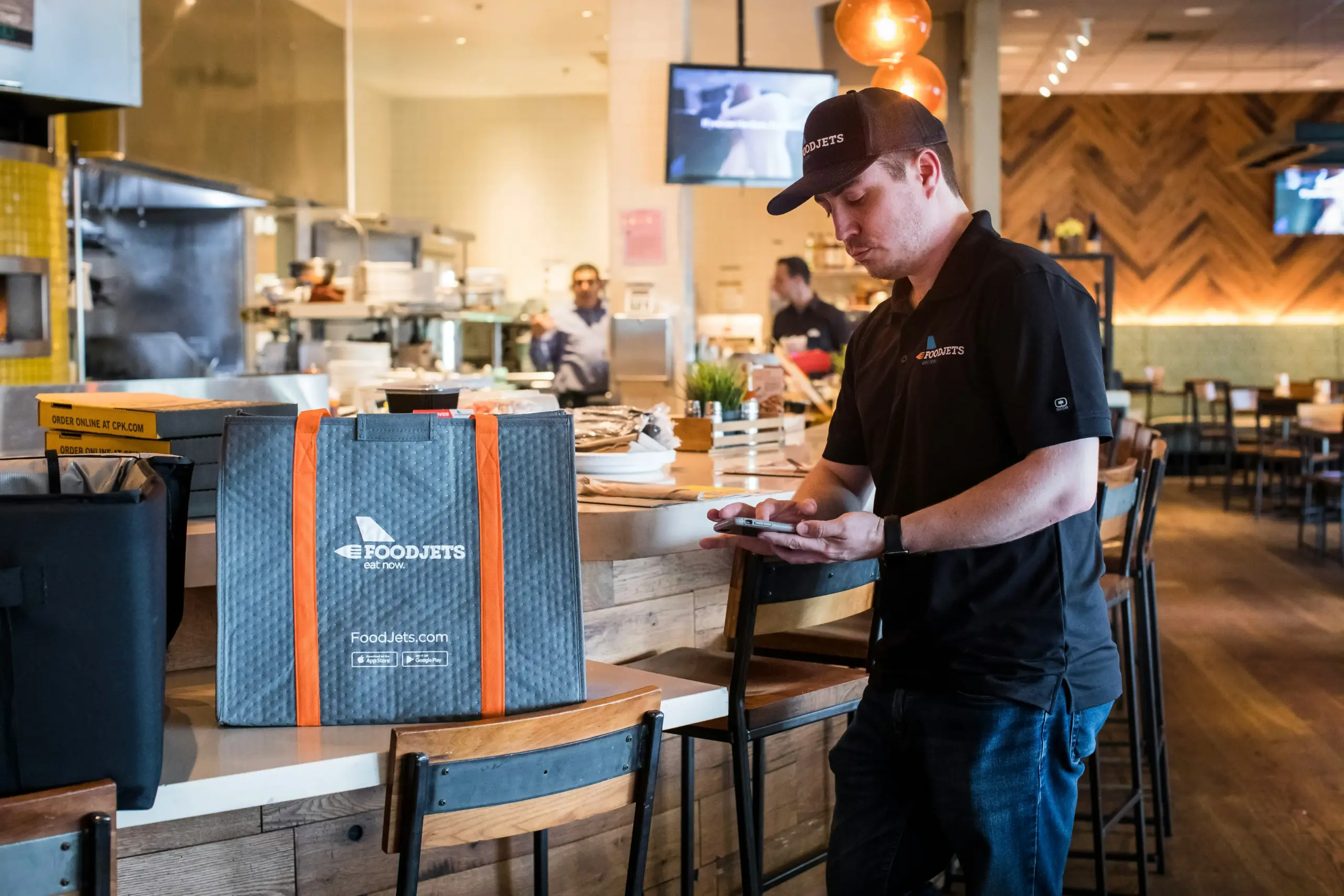
Because packaging creates a time window, the system should track time since dispatch. A customer-account page should not show only “in transit.” It should understand how long the order has been outside provider control and whether that time has crossed the provider’s stated safe window.
A cold-chain-aware order record should include:
| Field | Why it matters |
| Dispatch timestamp | Starts the transit clock |
| Product state | Chilled, frozen, or ambient |
| Packaging type | Determines expected protection window |
| Courier service | Determines delivery pattern |
| Delivery zone | Indicates likely transit duration |
| Tracking status | Shows parcel movement |
| Delay status | Flags carrier exception |
| Safe-window threshold | Supports decision-making |
| Customer receipt time | Confirms actual arrival |
| Customer condition report | Shows whether meals arrived cold or compromised |
If a box is delayed, support should not have to manually reconstruct the timeline from emails and courier scans.
The order record should already know which cases are low risk, monitoring risk, and high risk.
Cause 3: Chilled and frozen meals behave differently
The third cause is that chilled and frozen meals behave differently. A chilled meal, a frozen meal, and a snap-frozen meal delivered chilled may require different storage instructions, shelf-life expectations, customer messaging, and exception rules.
The website should not use one delivery explanation for all meal states.
| Meal state | Customer question |
| Chilled meal | How soon should I refrigerate and eat it? |
| Frozen meal | Should it arrive frozen solid? |
| Snap-frozen, delivered chilled | Can I refreeze it, refrigerate it, or eat within a set period? |
| Partially thawed frozen meal | Is it safe and what should I do? |
| Warm meal | Should I discard it or contact support? |
| Damaged packaging | Should I consume, photograph, or report? |
MPI’s safe-food-at-home guidance says chilled and frozen foods should be taken straight home after shopping, and its online food guidance says chilled and frozen products bought online should arrive chilled or frozen. FSANZ’s food delivery guidance says frozen foods should be frozen solid.
For a website, the implication is practical: the customer needs clear instructions for the state the meal is supposed to arrive in.
Effect 3: Product and delivery pages need state-specific instructions
Because chilled and frozen meals behave differently, product and delivery pages need state-specific instructions. The website should show what the customer should expect on arrival and what to do immediately after receiving the box.
A strong delivery page explains:
| Instruction | Why it matters |
| Expected arrival state | Chilled, frozen, or chilled after freezing |
| Storage on arrival | Fridge or freezer action |
| Safe-use window | Helps customer plan |
| Packaging signs | What normal packaging looks like |
| Ice pack condition | Avoids false alarm if policy allows melted packs |
| Delay procedure | What to do if delivery is late |
| Warm-food guidance | What to do if meals arrive warm |
| Damaged packaging | What to photograph and report |
| Rural delivery rules | Clarifies risk before checkout |
| Contact window | Encourages fast reporting |
The Family Kitchen says its meals are snap-frozen and delivered chilled nationwide in temperature-controlled packaging, while MealPrep.nz says its meals are snap-frozen at its NZ kitchen and shipped chilled in temperature-controlled packaging.
That kind of language should connect to specific storage and support instructions, not sit alone as marketing copy.
Cause 4: Courier status is not the same as cold-chain status
The fourth cause is that courier status is not the same as cold-chain status. A parcel can be “in transit,” “with courier,” or “delivered” without the provider knowing whether the food remained within the intended condition.
Courier tracking is necessary, but incomplete.
| Courier status | What it does not answer |
| Picked up | Was it packed at the intended temperature? |
| In transit | Has safe transit time been exceeded? |
| Delayed | Was it held chilled or at ambient temperature? |
| Out for delivery | How long has it been in a van? |
| Delivered | Was it received promptly or left outside? |
| Delivery attempted | What happens to chilled food now? |
| Returned to depot | Was it refrigerated or not? |
NZ Post service terms say perishable items are prohibited or restricted unless specified conditions are met, and NZ Post guidance for food and grocery deliveries says it can deliver most food products, including perishable items, but there are restrictions and requirements to avoid unnecessary delays.
That means provider systems should not treat every courier scan as enough. The food context still matters.
Effect 4: Customer messaging should combine tracking and food guidance
Because courier status is not the same as cold-chain status, customer messaging should combine tracking and food guidance. A tracking email should not only say “your order is delayed.” It should explain what the delay means, what the customer should check, and when support will intervene.
Example messages:
| Situation | Better message |
| Order dispatched | “Your meals have left our kitchen in temperature-controlled packaging. Refrigerate or freeze according to the instructions on arrival.” |
| Out for delivery | “Your meal box is due today. Please bring it inside as soon as possible.” |
| Delayed but within safe window | “Your box is delayed but still within our packaging window. We are monitoring tracking.” |
| Delayed beyond policy | “Please do not consume until we review the delivery state. Contact support with photos when it arrives.” |
| Delivered | “Please place meals in the fridge or freezer now and report any warm or damaged items immediately.” |
| Rural delay | “Your rural delivery has a higher delay risk. Check the delivery status and contact us if meals arrive warm.” |
The messaging should match the provider’s actual policy and food-control process.
The point is that meal prep delivery messages need food-state context, not only shipping status.
Cause 5: Failed cold-chain delivery is a retention event
The fifth cause is that failed cold-chain delivery is a retention event. A customer does not judge only whether the box eventually arrived. They judge whether the provider handled the issue clearly enough for them to trust another week.
A cold-chain failure can trigger:
- Food-safety concern.
- Lost dinner plan.
- Refund or credit expectation.
- Support urgency.
- Subscription pause.
- Cancellation.
- Address update.
- Rural-delivery reconsideration.
- Delivery-zone policy review.
That means the website should treat cold-chain exceptions as subscription-risk events.
A generic shipping support workflow might close the ticket after refunding. A meal prep workflow should also ask:
- Is the next order due soon?
- Should the customer be reminded to update address?
- Should the next order be paused while the issue is investigated?
- Was the delivery zone risky?
- Did the courier service perform within the safe window?
- Is this customer now at churn risk?
- Should support follow up before the next billing date?
Meal prep delivery is part of retention because the customer builds their week around it.
Effect 5: The website should trigger follow-up before the next cycle
Because failed cold-chain delivery is a retention event, the website should trigger follow-up before the next cycle. A customer who had a late, warm, damaged, or missing delivery should not simply roll into the next billing date with no acknowledgement.
A follow-up workflow should:
- Confirm the issue was resolved.
- Explain refund, credit, or replacement outcome.
- Confirm the next delivery date.
- Ask whether the customer wants to continue, skip, or pause.
- Prompt address or instruction update if relevant.
- Add internal delivery-risk notes.
- Monitor repeat delivery failures.
- Measure churn after cold-chain incidents.
This connects directly to the upstream article on florist website builder versus custom. Correction for this cluster: link to T2-B2 using anchor text such as “how NZ meal prep providers should choose between Shopify, subscription tools, and custom build.”
The follow-up matters because reliability is part of the meal subscription value. Customers do not only buy food. They buy confidence that food will arrive when their week depends on it.
Where generic shipping tools are still useful
Generic shipping tools are still useful for address capture, carrier rates, tracking numbers, dispatch notifications, delivery status, and customer-facing tracking links. The problem is not that generic shipping tools have no value. The problem is that they do not usually carry the full cold-chain decision model.
Use generic shipping tools for:
- Basic address entry.
- Courier service selection.
- Labels.
- Tracking links.
- Dispatch notifications.
- Delivery confirmation.
- Basic exception alerts.
Add meal-prep-specific logic for:
| Missing layer | Why it matters |
| Product temperature state | Chilled and frozen orders need different rules |
| Packaging window | Time-in-transit needs interpretation |
| Delivery-zone risk | Rural or long-distance delivery needs validation |
| Customer receipt condition | Food state matters after delivery |
| Safe-window threshold | Delay status needs escalation |
| Food-safety instructions | Customer needs action guidance |
| Subscription follow-up | Delivery failures affect churn |
| Kitchen reporting | Late dispatch or packing delay matters |
| Support triage | Warm, damaged, late, or missing orders need different paths |
The best stack may use standard shipping infrastructure, but it must wrap it in meal-prep-aware logic.
What cold-chain telemetry could unlock
Cold-chain telemetry can unlock stronger customer confidence and support decisions when temperature or location data is captured and connected to the order record. Not every independent provider needs real-time temperature sensors, but the principle matters: food-state evidence is more useful than parcel-state guesswork.
Possible telemetry or evidence layers include:
- Dispatch temperature checks.
- Packing timestamp.
- Courier pickup timestamp.
- Delivery timestamp.
- Temperature logger for selected routes.
- Photo proof of delivery.
- Customer receipt confirmation.
- Packaging type.
- Route-level delay data.
- Exception history by courier or region.
If telemetry exists, the website can show or use:
| Telemetry signal | Customer or staff value |
| Dispatch timestamp | Starts safe-window timer |
| Temperature logger | Supports safety decision |
| Delivery timestamp | Confirms time at door |
| Proof photo | Helps locate parcel |
| Route delay | Identifies systemic courier issue |
| Region risk score | Improves checkout rules |
| Packaging type | Guides exception handling |
| Customer receipt report | Completes cold-chain record |
This should be introduced carefully. Do not promise telemetry the provider does not actually have. But where the data exists, it should inform customer support and operational decisions.
What the customer account should show

The customer account should show the upcoming delivery, temperature expectation, tracking status, delivery window, safe-drop instructions, storage guidance, delay instructions, and a clear issue-reporting path.
A cold-chain-aware customer account should answer:
| Customer question | Account answer |
| When are my meals arriving? | Delivery date and tracking |
| What state should they arrive in? | Chilled or frozen expectation |
| What should I do when they arrive? | Fridge or freezer instructions |
| What if I am not home? | Safe-drop and authority-to-leave rules |
| What if they are delayed? | Delay guidance and support route |
| What if they are warm? | Food-safety report path |
| What if packaging is damaged? | Photo and issue form |
| Can I update delivery notes? | Edit window and lock state |
| What happens to next week? | Subscription status and controls |
The customer should not have to search the FAQ during a temperature concern.
The account should surface the right guidance at the right time.
What staff should see
Staff should see cold-chain delivery data in a structured operational view, not only in courier portals and customer emails. The support and operations team need enough information to decide whether to monitor, escalate, refund, replace, or warn the customer not to consume.
Useful staff fields include:
| Staff field | Why it matters |
| Product state | Chilled, frozen, or mixed |
| Packaging type | Determines expected protection |
| Dispatch time | Starts time-in-transit |
| Courier pickup time | Confirms handoff |
| Tracking status | Shows movement |
| Delivery zone | Highlights rural or long-distance risk |
| Customer delivery instructions | Checks access |
| Delivery timestamp | Confirms receipt or safe drop |
| Delay duration | Supports safe-window decision |
| Customer condition report | Shows received state |
| Photos | Supports resolution |
| Next subscription date | Enables retention follow-up |
| Root cause | Improves future delivery rules |
This view should make triage faster.
If staff need to open five systems and reconstruct the temperature story manually, the website is not supporting cold-chain operations.
What policy pages should say
Cold-chain policy pages should explain delivery areas, delivery days, chilled or frozen expectations, packaging method, safe transit window, rural limitations, safe-drop rules, customer receipt responsibilities, delay handling, warm-food reporting, damaged packaging, refunds, replacements, and subscription impact.
A strong policy page includes:
- Where delivery is available.
- Which days delivery occurs.
- Whether meals arrive chilled or frozen.
- How meals are packed.
- How long packaging is designed to protect meals.
- What customers should do on arrival.
- What happens if the order is delayed.
- What happens if meals arrive warm.
- What happens if packaging is damaged.
- What happens for rural delivery.
- How quickly customers must report issues.
- Whether replacement, credit, or refund may apply.
- What happens to the next subscription delivery.
The policy should be specific to the provider. Avoid copying another provider’s 48-hour claim unless the same packaging, courier service, product state, and food-control process support it.
Cold-chain copy is not just marketing. It is an operational promise.
What providers should avoid
Providers should avoid treating chilled or frozen meals like ambient parcels, hiding rural risk, using vague “temperature-controlled” claims without customer instructions, sending generic delay emails, accepting unsupported addresses, and closing support tickets without next-cycle retention follow-up.
Avoid:
- “Ships nationwide” without explaining cold-chain limits.
- “Temperature-controlled packaging” without arrival expectations.
- Delay messages that do not mention food state.
- Generic shipping tools with no safe-window logic.
- Checkout that accepts risky rural addresses without warning.
- Customer accounts with tracking but no storage guidance.
- Warm-food reports routed to normal support queues.
- Refund decisions without root-cause tracking.
- Next subscription billing after a failed delivery with no follow-up.
- Policy pages that do not match actual courier and packaging capability.
Cold chain is where fulfilment, food safety, and customer trust meet.
A website that ignores that layer is underbuilt.
Key Takeaways
- Cold-chain meal delivery is not ordinary shipping. It is the controlled movement of prepared meals in the required chilled or frozen state from kitchen to customer.
- Generic shipping tools usually track parcel movement, while meal prep delivery also needs food-state logic.
- MPI guidance says chilled and frozen products bought online should arrive chilled or frozen and be packaged appropriately for temperature control.
- Food-business guidance says chilled food should be transported at or below 5°C and frozen food should be kept frozen.
- Cold-chain risk starts before checkout through delivery-zone, rural, safe-drop, delivery-day, and cut-off decisions.
- Packaging creates a time window, not unlimited protection.
- Chilled, frozen, and snap-frozen meals need different customer instructions and exception rules.
- Courier status is not the same as cold-chain status.
- Delivery delays, warm meals, damaged packaging, and missed delivery should trigger food-safety triage and subscription-retention follow-up.
- The strongest meal prep websites combine shipping infrastructure with meal-prep-specific logic for temperature state, time-in-transit, packaging window, delivery risk, support triage, and customer guidance.
Generic shipping asks whether the box arrived. Cold-chain meal delivery asks whether the food arrived in the state the customer can trust. Meal prep ecommerce has to answer the second question, not just the first.