

An indie skincare brand selling only through retailer platforms is not building the full brand.
It is filling someone else’s catalogue.
That may create reach. It may create early sales. It may place the product beside trusted names. But it does not give the brand full control over the buying decision.
Skincare is not a simple product category. Customers want to understand ingredients, skin concerns, claims, suitability, texture, routine fit, reviews, values, origin, and repeat-use expectations before they buy. A retailer product page can rarely carry all of that context. It has to standardise many brands into one shelf.
An owned ecommerce website does something different.
It lets the skincare brand explain why the product exists, who it is for, how it fits into a routine, what the formulation choices mean, what claims are being made, and why the customer should trust the brand enough to put it on their skin.
For indie NZ skincare brands, owned ecommerce is not only a sales channel. It is the infrastructure for brand memory, customer trust, and long-term growth.
Why retailer platforms are useful but incomplete
Retailer platforms are useful because they offer reach, discovery, credibility, fulfilment infrastructure, and access to customers who are already shopping for beauty products. For an indie skincare brand, that can matter.
A retailer can help with:
| Retailer platform advantage | Why it helps |
| Existing traffic | Customers are already browsing |
| Category credibility | The brand appears beside known products |
| Retail trust | Customers may trust the store |
| Promotions | Retailers can drive seasonal demand |
| Fulfilment | Some logistics may be handled externally |
| Marketplace discovery | Customers can compare products quickly |
The problem is not that retailers are bad.
The problem is that retailer platforms are incomplete brand environments.
They often compress the brand into:
- Product name.
- Image.
- Price.
- Short description.
- Ingredient list.
- Reviews.
- Delivery information.
- A few category filters.
That may be enough to sell a familiar product. It is often not enough to build belief in an indie skincare brand.
A skincare customer may want to know why a serum uses one active instead of another, whether the formula suits sensitive skin, how to layer it with moisturiser, how long to use it before judging results, and whether the brand’s “natural,” “clean,” “NZ made,” or sustainability claims are meaningful.
Those explanations need space.
Retailer shelves rarely provide enough.
Cause 1: Skincare customers research before trusting
The first cause is that skincare customers research before trusting. They are not only buying a jar, oil, cleanser, or serum. They are deciding whether the product belongs on their skin.
That makes skincare a high-consideration ecommerce category.
Customers may compare:
- Ingredients.
- Actives.
- Fragrance.
- Skin type suitability.
- Skin concern.
- Texture.
- Reviews.
- Routine compatibility.
- Before-and-after content.
- Brand values.
- Origin story.
- Claims.
- Sustainability.
- Price per use.
- Reorder pattern.
Beauty research supports this. Tinuiti’s 2025 beauty shopper research found that many shoppers consider clean ingredients important in beauty purchase decisions, and that search and social channels are used for beauty research.
The practical point for indie skincare brands is clear: the customer journey often begins before the product page and continues beyond checkout.
A retailer listing captures only one part of that journey.
Effect 1: Owned ecommerce becomes the education layer

Because customers research before trusting, owned ecommerce becomes the education layer. The brand’s own website can explain the product in a way that a retailer template cannot.
A strong indie skincare website can include:
| Education asset | Customer question it answers |
| Ingredient library | What is this ingredient and why is it used? |
| Skin concern guide | Which product suits my concern? |
| Routine builder | What order should I use products in? |
| Product comparison | Which serum or moisturiser is right for me? |
| Formula notes | Why this texture, scent, base, or active? |
| Claim explanation | What does this claim mean and what supports it? |
| Founder or formulator story | Why should I trust this brand? |
| Usage guide | How often should I use it? |
| Compatibility guide | What should or should not be layered? |
| Reorder guidance | When will I need to buy again? |
This is where an indie brand can become memorable.
A retailer platform can show the product.
An owned site can teach the customer how to think about the product.
Cause 2: Claims need context and care
The second cause is that skincare claims need context and care. Product claims are not just marketing language. They affect trust, compliance, and customer expectations.
In New Zealand, the Commerce Commission says businesses must have reasonable grounds for claims when they make them, and claims should be truthful and not misleading.
EPA NZ also says cosmetic makers and importers must follow the Cosmetic Products Group Standard and lists requirements relating to ingredients, labelling, packaging, and safety data sheets. EPA guidance says cosmetic labels must list all ingredients from highest to lowest concentration and identify nanomaterials using “nano” in brackets.
This matters for ecommerce because claims often appear in many places:
- Product page.
- Home page.
- Landing page.
- Ads.
- Email.
- Social content.
- Influencer briefs.
- Retailer listing.
- Packaging.
- FAQ.
- Blog.
- Routine guide.
If the retailer page says one thing, the brand site says another, and the packaging says something else, the brand has a trust problem.
Effect 2: Owned websites keep claim context consistent
Because claims need context and care, owned websites help keep claim context consistent. The brand can define what it says, where it says it, and what evidence or explanation supports it.
A strong claim system includes:
| Claim type | Owned-site requirement |
| Ingredient claim | Explain the ingredient’s role in the formula |
| NZ-made claim | Explain what is made, sourced, or packaged in NZ |
| Clean claim | Define what the brand means and does not mean |
| Sensitive-skin claim | Explain suitability and limitations |
| Sustainability claim | Explain materials, sourcing, packaging, and trade-offs |
| Fragrance-free claim | Clarify formulation accurately |
| Vegan claim | Explain ingredient and testing boundary |
| Results claim | Keep expectations realistic and substantiated |
Consumer NZ warns that “free-from” cosmetic claims can be misleading if they imply superiority or safety where that is not justified.
That is exactly why owned ecommerce matters. It gives the brand room to explain claims responsibly instead of relying on short catalogue copy.
Cause 3: Retailer pages flatten differentiation
The third cause is that retailer pages flatten differentiation. Retailers need standardised product listings so customers can compare many brands quickly. That is good for browsing, but bad for deep brand-building.
A retailer page often gives every product the same shape:
- Name.
- Price.
- Size.
- Short description.
- Key ingredients.
- Review score.
- Add to cart.
That format encourages comparison by price, rating, discount, and familiar ingredient buzzwords.
Indie skincare brands often win on more nuanced differentiation:
| Indie skincare strength | Why a retailer page may not capture it |
| Formulation philosophy | Needs explanation |
| Local ingredient story | Needs sourcing context |
| Founder expertise | Needs narrative |
| Skin concern focus | Needs guided education |
| Texture and sensory detail | Needs video, copy, and reviews |
| Routine design | Needs cross-product logic |
| Sustainability decisions | Needs proof and trade-offs |
| Community trust | Needs first-party content |
| Batch or maker story | Needs brand-owned storytelling |
If the brand’s strongest reasons to believe do not fit into the retailer format, the brand is competing with one hand tied.
Effect 3: Owned ecommerce protects the formulation story
Because retailer pages flatten differentiation, owned ecommerce protects the formulation story. It lets the brand explain the decisions behind the product.
A formulation story might include:
- Why the product uses a particular active.
- Why the concentration is gentle rather than aggressive.
- Why the texture suits humid or dry climates.
- Why fragrance was included or excluded.
- Why the packaging protects the formula.
- Why the routine has three steps instead of ten.
- Why the product is designed for a specific skin concern.
- Why local botanicals or ingredients were chosen.
- Why certain trend ingredients were avoided.
This matters because indie skincare brands often do not win by outspending large brands.
They win by making the customer feel, “This was made for someone like me.”
That feeling requires a brand-owned environment.
Cause 4: Customer data does not fully belong to the brand on retailer platforms
The fourth cause is that customer data does not fully belong to the brand on retailer platforms. Retailers may provide sales reporting, but the brand usually does not get the full direct customer relationship.
That limits learning.
An owned ecommerce site can show:
| First-party signal | Why it matters |
| Search queries | What customers are looking for |
| Product page views | Which products attract interest |
| Routine-builder answers | Skin concerns and needs |
| Email signups | Intent before purchase |
| Repeat purchase interval | Reorder timing |
| Cart abandonment | Conversion friction |
| Review content | Product perception |
| Quiz results | Customer segmentation |
| Sample requests | Trial intent |
| Subscription or replenishment behaviour | Retention opportunity |
| Support questions | Information gaps |
| Returns or refunds | Product-fit issues |
Retailer sales data can tell the brand what sold.
Owned ecommerce can tell the brand why customers hesitated, what they wanted to know, what they compared, when they returned, and what education was missing.
For indie skincare, that learning can guide product development, content, email, packaging, bundles, and retailer strategy.
Effect 4: Owned ecommerce becomes the learning loop
Because customer data is limited on retailer platforms, owned ecommerce becomes the learning loop.
The website can help answer:
- Which skin concerns drive discovery?
- Which ingredient pages lead to purchase?
- Which products are bought together?
- Which first purchase leads to repeat purchase?
- Which claims create questions?
- Which routines need clearer education?
- Which customers need replenishment reminders?
- Which product pages create drop-off?
- Which reviews mention texture, scent, irritation, glow, dryness, or packaging?
- Which products should be sampled, bundled, or reformulated?
This is not just analytics.
It is product intelligence.
An indie skincare brand that owns the learning loop can improve faster than a brand that waits for retailer sales summaries.
Cause 5: Skincare is repeat-purchase driven
The fifth cause is that skincare is repeat-purchase driven. A customer may buy once from a retailer, but the brand’s long-term value comes from repeat use, routine building, and replenishment.
Owned ecommerce supports that cycle.
A skincare site can create:
| Retention feature | Purpose |
| Replenishment reminders | Prompt reorder at the right time |
| Routine emails | Teach correct product use |
| Skin concern sequences | Build confidence over time |
| Bundles | Encourage complete routine |
| Sample-to-full-size flow | Convert trial |
| Subscription or auto-replenishment | Reduce repeat friction |
| Loyalty programme | Reward direct relationship |
| Review requests | Capture proof |
| Post-purchase education | Reduce misuse or disappointment |
| Win-back flows | Recover lapsed customers |
A retailer platform may sell the first unit.
The owned site can build the second, third, and fourth purchase.
That is where brand equity compounds.
Effect 5: Owned websites turn product sales into customer relationships
Because skincare is repeat-purchase driven, owned websites turn product sales into customer relationships. The brand can stay present after the first order.
A strong post-purchase flow might look like:
- Order confirmation.
- How to use the product.
- What to expect in week one.
- How to layer it with other products.
- When to slow down or patch test.
- When to reorder.
- What to add next.
- Review request.
- Routine refinement.
- Replenishment reminder.
This relationship is hard to build when the customer belongs primarily to the retailer.
Retailers are excellent at selling categories.
Owned ecommerce is better at building customer memory around one brand.
Why indie NZ skincare brands need both owned and retail strategy
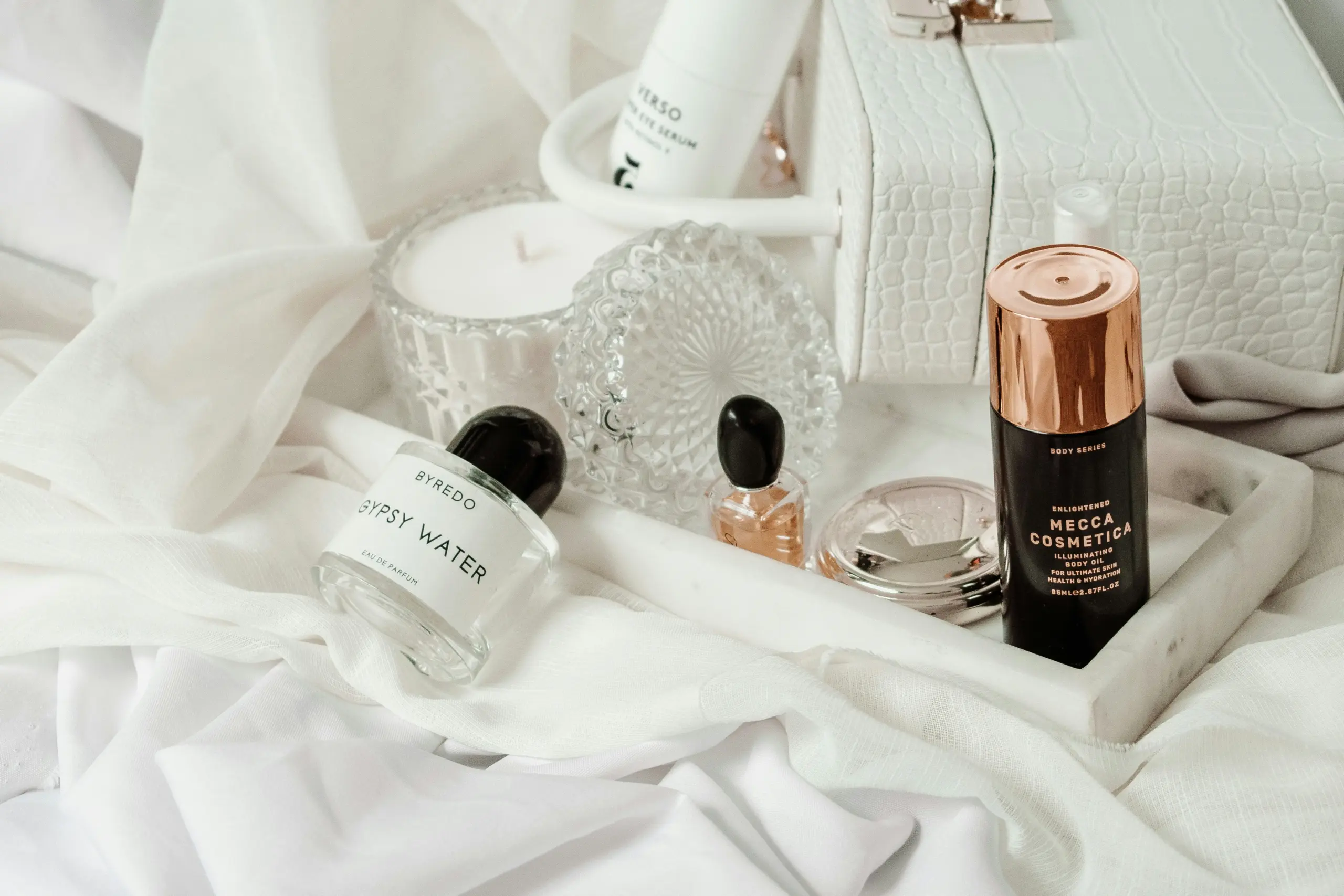
Indie NZ skincare brands do not need to reject retail. They need to understand the job of each channel.
Retailer platforms are useful for reach and trust.
Owned ecommerce is useful for control and learning.
A balanced strategy might look like this:
| Channel | Best role |
| Retailer platform | Discovery, credibility, convenience, category browsing |
| Owned ecommerce | Education, routine building, claims context, first-party data, retention |
| Social | Awareness, proof, community, creator content |
| Education, replenishment, launch, retention | |
| Search | Ingredient, concern, and product research |
| Retail store | Trial, texture, sampling, impulse discovery |
The owned website is the anchor.
Retail can expand reach, but the brand should not let retailer pages become the only place the story lives.
What an indie skincare ecommerce website should include
An indie skincare ecommerce website should include more than a product grid and checkout. It should help the customer understand the product, decide if it suits them, and feel confident using it.
Core pages and features include:
| Website element | Why it matters |
| Product pages | Ingredients, claims, usage, reviews, suitability |
| Ingredient library | Builds education and search visibility |
| Skin concern guides | Helps customers self-select |
| Routine builder | Connects products into a system |
| Comparison tables | Reduces decision confusion |
| Claim explanations | Supports trust and compliance care |
| Founder or formulation story | Creates human trust |
| Sustainability page | Explains proof, not slogans |
| FAQ | Answers objections |
| Review system | Builds social proof |
| Email capture | Owns relationship before purchase |
| Replenishment flows | Supports repeat purchase |
| Sample or starter kit flow | Reduces first-order risk |
| Mobile checkout | Reduces friction |
| Analytics | Turns behaviour into learning |
The goal is not to add content for its own sake.
The goal is to answer the questions that skincare customers already have.
What product pages need to do differently
Skincare product pages need to do more than describe the item. They need to reduce uncertainty.
A strong product page answers:
- What is this product?
- Who is it for?
- What skin concern does it address?
- What are the key ingredients?
- What is the full ingredient list?
- How should it be used?
- How often should it be used?
- What should it be layered with?
- What should it not be layered with?
- What results should be expected?
- What claims are being made?
- What limitations should the customer know?
- What do reviews say?
- When should the customer reorder?
EPA NZ guidance requires cosmetic labels to list ingredients from highest concentration to lowest and notes that cosmetic rules cover ingredients, labelling, packaging, and safety data sheets. Commerce Commission guidance reinforces that claims need reasonable grounds.
An owned product page can make that information easier to understand before purchase.
What retailer-only brands risk losing
A retailer-only indie skincare brand risks losing more than margin. It risks losing control over the customer’s understanding of the product.
Retailer-only risk includes:
- Limited ingredient education.
- Weak claim context.
- Less control over reviews and questions.
- Reduced customer data.
- Less direct email capture.
- Lower routine-building ability.
- Weaker replenishment flows.
- Less ability to explain formulation philosophy.
- Higher dependence on retailer search and merchandising.
- Harder product-development feedback loops.
- Less control when competitors appear beside the product.
- Less resilience if retailer placement changes.
The danger is strategic dependency.
If the retailer owns the context, the retailer owns much of the customer relationship.
What providers should avoid
Indie skincare brands should avoid treating retailer placement as a substitute for owned ecommerce. They should also avoid launching owned websites that merely duplicate retailer listings.
Avoid:
- Product pages with shallow copy.
- Ingredient lists without explanation.
- Claims without context.
- “Clean” or “natural” language with no definition.
- No skin concern pathways.
- No routine guidance.
- No review capture.
- No replenishment logic.
- No email capture.
- No first-party analytics.
- No mobile purchase optimisation.
- No explanation of NZ origin or formulation choices.
- Retailer pages becoming the only source of product truth.
An owned site should not be a brochure.
It should be the brand’s decision engine.
Key Takeaways
- Indie skincare ecommerce in NZ is not only about selling direct. It is about owning the product story, claims context, customer data, routine education, and repeat-purchase relationship.
- Retailer platforms can provide reach and credibility, but they usually compress brands into standard catalogue formats.
- Skincare customers often research ingredients, reviews, claims, skin suitability, routines, and brand trust before purchase.
- EPA NZ guidance shows cosmetic makers and importers need to follow ingredient and labelling requirements under the Cosmetic Products Group Standard.
- Commerce Commission guidance says businesses need reasonable grounds for claims when they make them.
- Owned ecommerce gives indie skincare brands space to explain formulation, usage, routine fit, sustainability, origin, and limitations responsibly.
- First-party data helps brands learn what customers search, compare, ask, abandon, buy, reorder, and review.
- Retail can expand reach, but owned ecommerce should anchor the brand’s story and learning loop.
- A strong skincare website includes product education, ingredient pages, skin concern guides, routine logic, reviews, replenishment flows, and analytics.
- The brand that owns the customer relationship can improve faster, communicate better, and build more durable trust.
An indie skincare brand should not depend entirely on someone else’s shelf to explain why it matters. Retail can help customers find the product. Owned ecommerce helps them believe in it, use it correctly, return to it, and remember the brand behind it.